Venice housing stock ranges from early 1900s bungalows in Oakwood and the Canals to mid-century builds near Rose Avenue. These older plaster and lath walls absorb water quickly and release it slowly, so mitigation must address hidden pockets behind baseboards and under tile rather than surface drying alone. Salt air from the Pacific accelerates corrosion on metal lath and electrical boxes once moisture lingers, which is why we isolate affected zones immediately and use moisture meters calibrated for coastal conditions.
Winter rains, though infrequent, can overwhelm the flat roofs and aged drainage common along Abbot Kinney Boulevard and near Venice Skatepark. When water enters through roof transitions or window sills, it travels along the dense clay soils that underlie much of Venice Beach, pushing moisture into slab edges and crawl spaces. Mitigation crews must account for this lateral movement or risk mold growth weeks later in adjacent units.
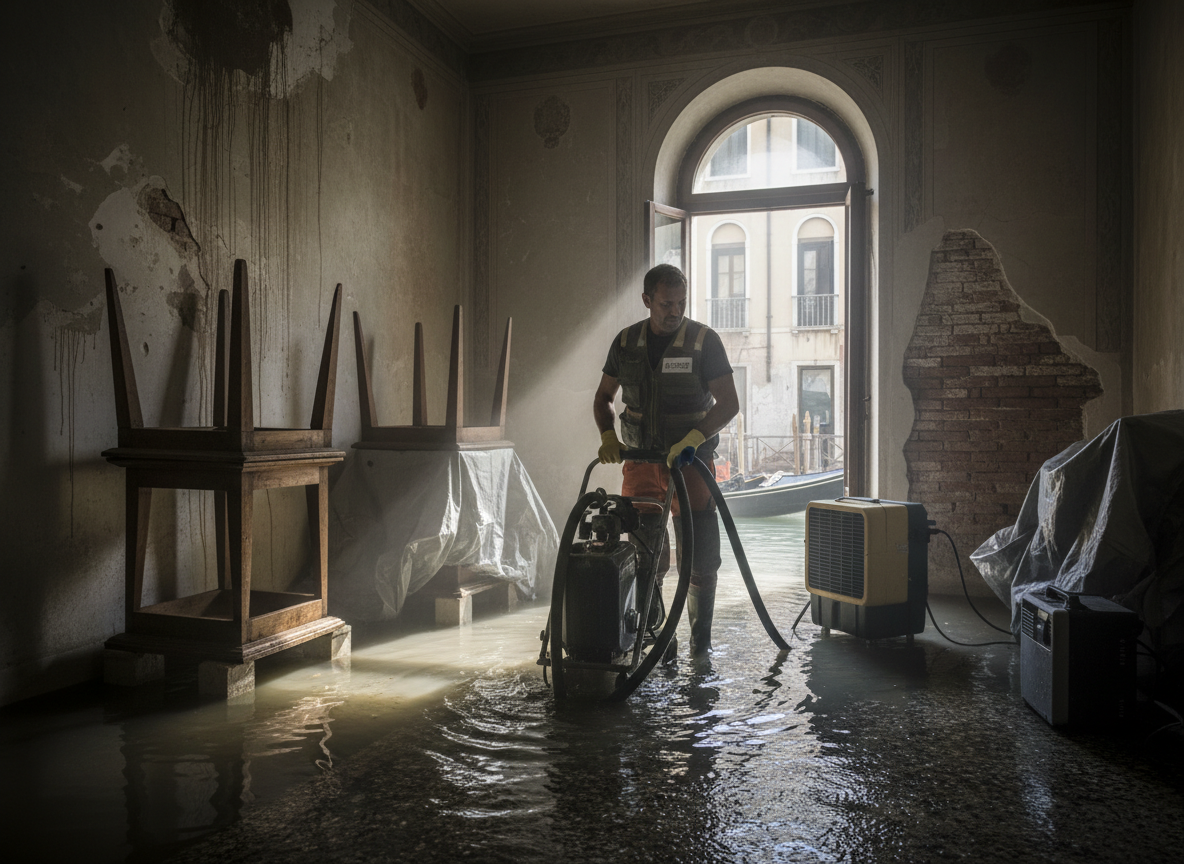
We begin with negative-air containment to protect neighboring rooms, then extract standing water before it migrates toward the Venice Canals or Marina del Rey border. Desiccant and low-grain refrigerant dehumidifiers run continuously while we monitor relative humidity in multiple wall cavities. This approach prevents the rapid swelling of hardwood floors common in restored Canals homes and keeps secondary damage from reaching nearby Santa Monica and Culver City properties.
Technician insight
In Venice the thing that catches most people out with water damage mitigation is how quickly salt-laden air turns hidden moisture into corroded wiring inside older Oakwood plaster walls. Homeowners often stop at visible drying and miss the slab-edge migration that winter rains push under Canals homes.
Canals Home Moisture Intrusion
Winter rain entered through a roof transition on a 1920s bungalow near the Venice Canals. We found elevated moisture extending two feet into perimeter walls and under the living-room slab. Containment and continuous drying prevented spread to the neighboring unit; final readings cleared the structure without demolition.
How it works
- 1
Site Assessment
Technicians map moisture migration through walls, floors and ceilings using meters and infrared, noting proximity to the beach and any salt exposure.
- 2
Containment Setup
Plastic barriers and negative air machines isolate the affected zone to stop airborne particles from reaching unaffected areas of the home or adjacent units.
- 3
Water Extraction
Standing water is removed with truck-mounted pumps and portable extractors, focusing on slab edges and subfloor cavities typical in Venice construction.
- 4
Drying and Monitoring
Air movers and dehumidifiers run until moisture readings return to normal; daily logs track progress in the mild Mediterranean climate.
Pricing
Upfront quotes after on-site inspection; final cost depends on square footage affected, depth of water intrusion and drying duration required.