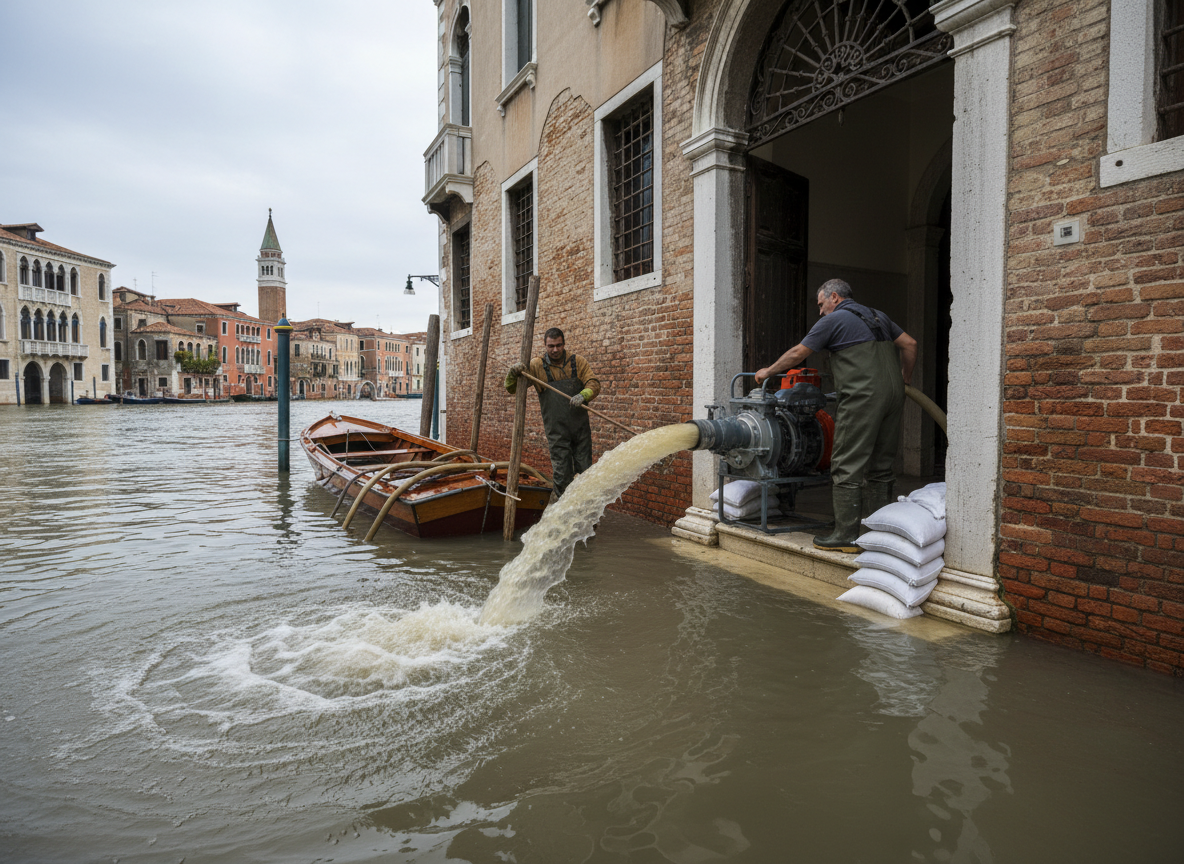
Venice housing stock includes many 1920s-1950s bungalows and converted beach cottages clustered around the Canals and Oakwood. These older wood-frame structures with pier-and-beam foundations trap water under floors and in wall cavities faster than newer builds in Santa Monica or Marina del Rey. Emergency water removal here requires immediate negative-air machines and moisture mapping because salt air accelerates corrosion in metal subfloor components once moisture lingers beyond 48 hours.
Winter rains, though mild in Los Angeles County’s Mediterranean climate, concentrate runoff along Rose Avenue and Abbot Kinney Boulevard where storm drains often back up near the Venice Skatepark and Boardwalk. When water enters through sliding doors or low window sills, it travels laterally across concrete slabs common in Canals-side homes. Technicians must pull baseboards early and check for hidden saturation behind plaster walls before mold sets in the humid coastal air.
Extraction equipment must account for tight alley access and narrow lots typical in Abbot Kinney and Oakwood neighborhoods. Submersible pumps and truck-mounted vacuums are staged at the curb while infrared cameras locate water that has wicked into hardwood floors or under built-in cabinetry. Delaying removal even one day in these older homes often forces replacement of original tongue-and-groove flooring that cannot be salvaged once cupping begins.
Technician insight
In Venice, the thing that catches most people out with Emergency water removal is how quickly water travels under the raised foundations of 1920s bungalows near the Canals; the high water table plus salt air means you have to pull baseboards and check for hidden saturation the same day or the original hardwood starts cupping before you finish drying.
Canal-adjacent Bungalow Flooding
A winter rain overwhelmed the storm drain behind a 1940s home off the Venice Canals. Water entered through a sliding door and wicked under the living-room floor. We extracted standing water, mapped moisture into the pier-and-beam space, and ran drying equipment for four days until readings matched the unaffected bedrooms. The owners avoided floor replacement by acting before cupping set in.
How it works
- 1
Arrival and Safety Assessment
Technician arrives within the service window, shuts off water source if active, and checks for electrical hazards in wet zones.
- 2
Water Extraction
Standing water is removed using portable and truck-mounted equipment suited to narrow Venice streets and limited parking near the Canals.
- 3
Moisture Mapping
Infrared and pin meters document saturation in walls, floors, and under cabinets typical of older Abbot Kinney and Oakwood homes.
- 4
Drying and Monitoring
Air movers and dehumidifiers are placed; daily moisture readings continue until levels match unaffected areas of the structure.
Pricing
Upfront quotes based on water volume, access constraints, and drying duration; no hidden trip fees for Venice addresses.