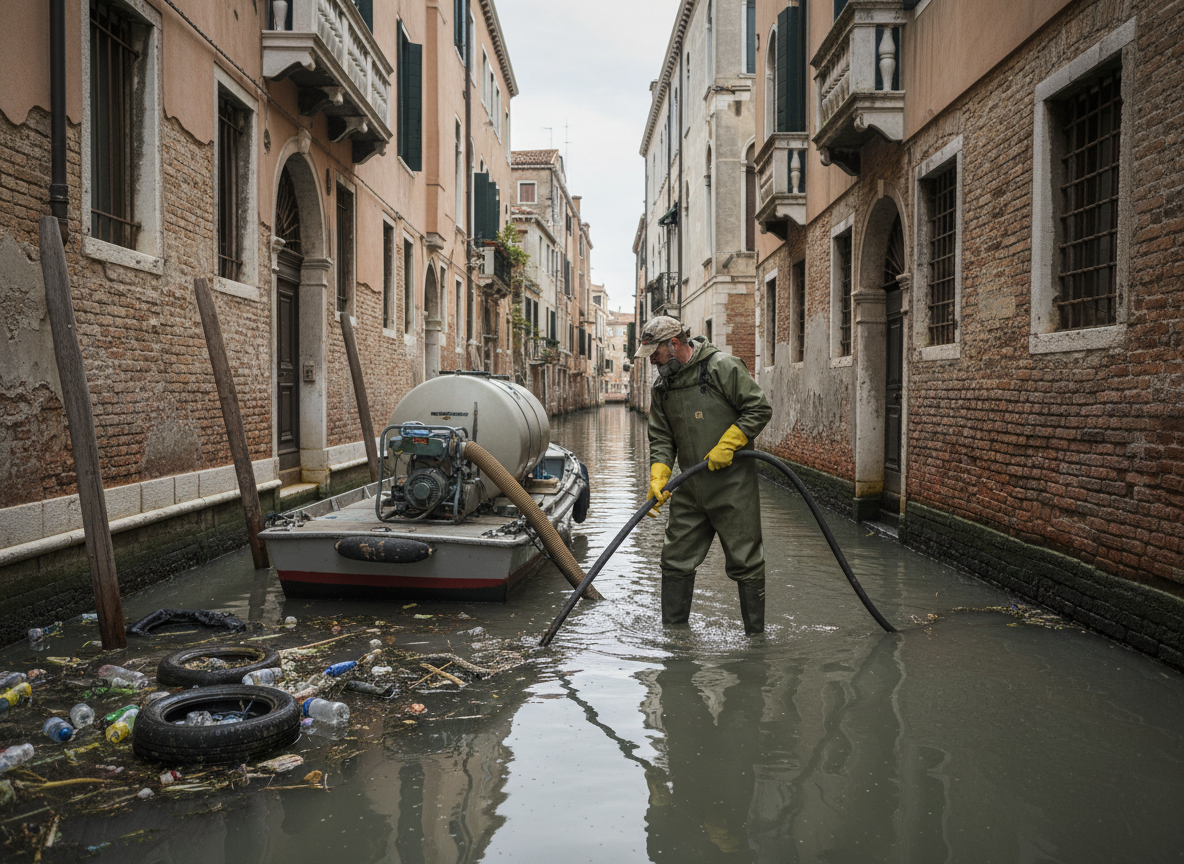
Venice properties, especially the older bungalows around the Canals and Oakwood, often sit on aging sewer lines that crack from shifting soil and tree roots common in Los Angeles County. When sewage backs up, it quickly saturates hardwood floors and plaster walls that were never designed for modern moisture loads. Our crews start by isolating the affected zones, removing standing water with extraction equipment rated for Category 3 waste, and then applying antimicrobial agents to prevent bacterial growth that thrives in the area's mild, humid winters.
The proximity to the Venice Canals and the beach means groundwater can push sewage upward through floor drains during heavy rains, a pattern we see repeatedly on Rose Avenue and near the Skatepark. Homeowners sometimes attempt to clean visible mess themselves, but porous materials like carpet pad and drywall must be cut out to meet county health standards. We document moisture readings at multiple depths so insurance adjusters see exactly where contamination traveled.
After removal, we use negative air machines and dehumidifiers sized for the tight layouts typical of Abbot Kinney apartments and converted garages. Final clearance testing confirms airborne pathogens have returned to safe levels before any reconstruction begins. This step-by-step approach protects both residents and neighboring properties in dense blocks where shared walls can spread odors quickly.
Technician insight
In Venice, the thing that catches most people out with sewage cleanup is how quickly water travels under the raised foundations of 1920s bungalows near the Canals. One backup on Abbot Kinney can wick into three neighboring units before anyone notices because the soil stays damp year-round from the mild Mediterranean climate.
Canal-adjacent Bungalow Backup
Sewage backed up through a floor drain after a winter rain in an Oakwood home. We found water had traveled under the subfloor into the living room and kitchen. Extraction and selective demolition stopped further spread into shared walls, and the home passed clearance testing within four days.
How it works
- 1
Emergency Assessment
Arrive within the hour, identify the source, and map all contaminated zones using moisture meters.
- 2
Containment and Extraction
Set up barriers, remove standing sewage, and extract water from flooring and walls.
- 3
Removal of Affected Materials
Cut out saturated drywall, carpet, and insulation while bagging waste for proper disposal.
- 4
Cleaning and Drying
Apply EPA-registered disinfectants, then run commercial drying equipment until readings normalize.
- 5
Clearance and Documentation
Perform final testing and provide a written report for insurance and county records.
Pricing
Cost depends on the volume of affected space, depth of saturation, and whether structural materials must be removed.